
Table of Contents
Introduction
There’s an adage as old as time: Fast, cheap, and reliable pick two. While this still reigns true today, we highly prefer the cheap option. The majority of car enthusiasts aren’t multi-millionaires with twenty car garages. At best, we have one daily driver and one fun car. Some people have a car that does both.
Turbochargers are a wicked fun option to make a car go fast. Some manufacturers use them to offset lower displacement vehicles. Regardless of the application, there are tons of options out there from entry-level vehicles to top of the line sports cars. For this article, we wanted to cover the cheapest turbocharged sports cars on the used market so you can get behind the wheel and build something fun!
The Cheapest Turbocharged Sports Cars
1. Dodge Neon SRT-4
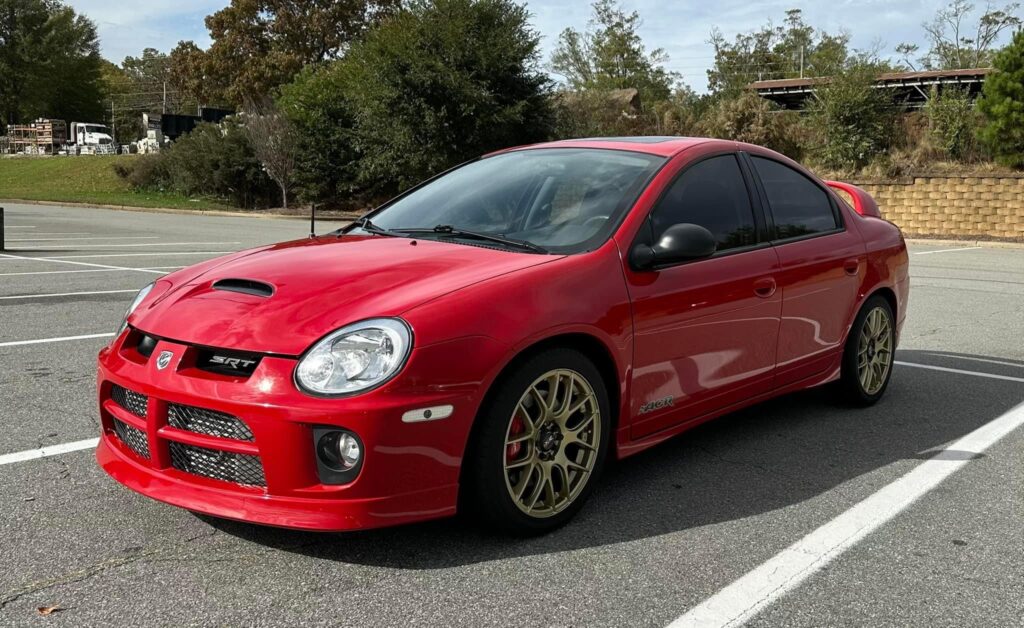
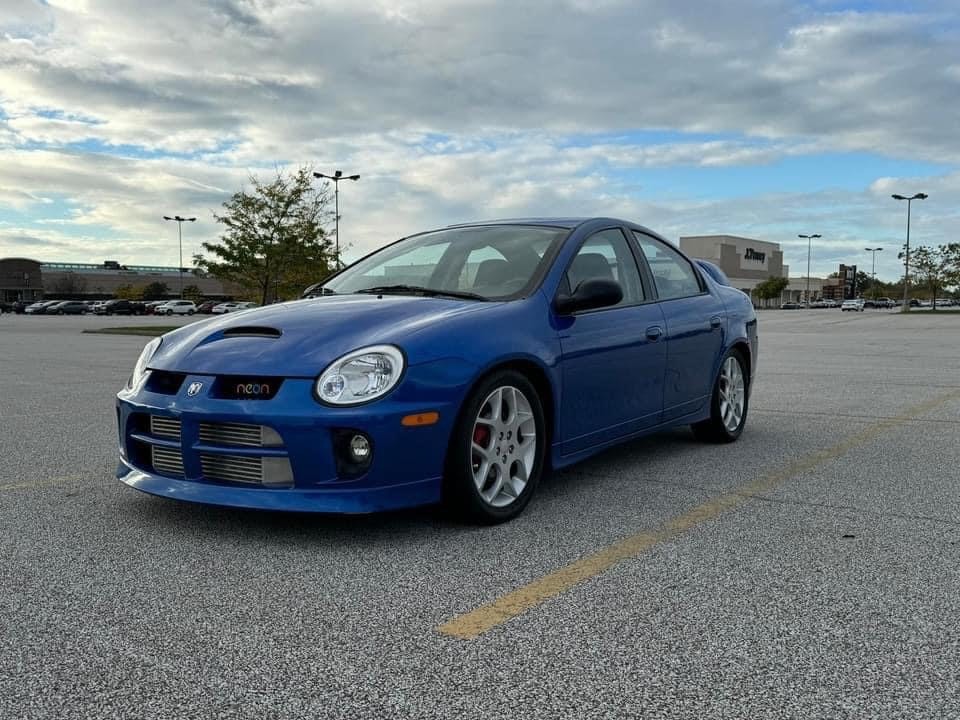
If you were around for the early-2000’s car scene, then you know the impact this car had on American performance cars. With few mods, the SRT-4 is capable of punching above its weight class. While the interior may be lackluster, you don’t buy an SRT-4 for luxury. You get behind the wheel of an SRT-4 for an easy car to modify to 400 wheel horsepower while being an absolute featherweight.
In today’s market, I am seeing the SRT-4 Neons for sale between $6,000-$10,000 all day. While cheaper ones may be beaten up, a nice one costing you $10,000 makes it one of the cheapest turbocharged sports car available!
2. Ford Focus ST
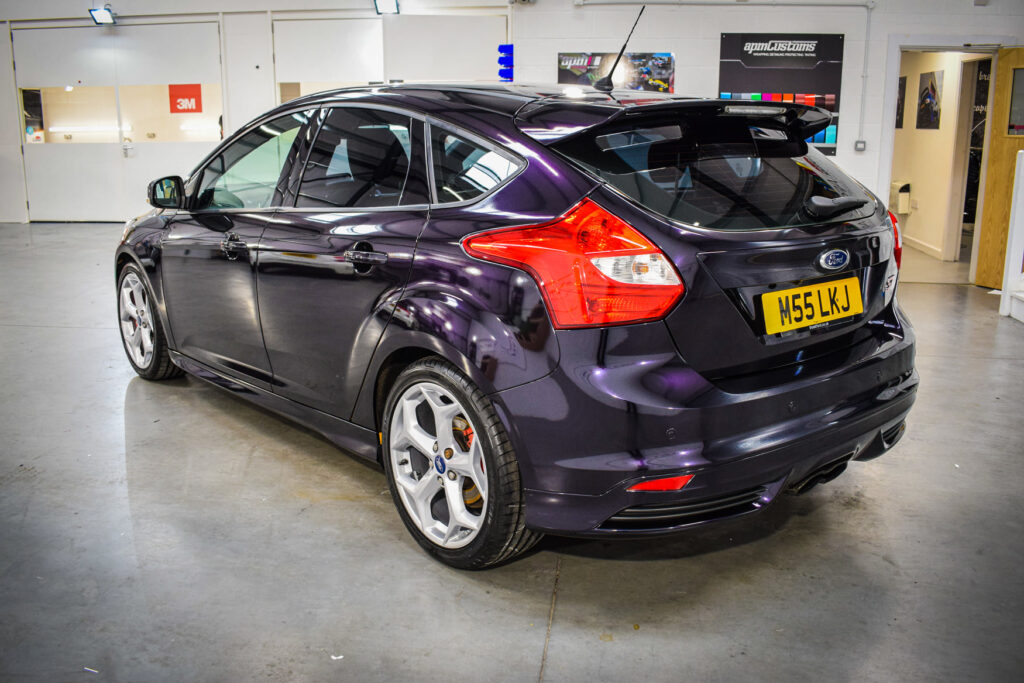
The Blue Oval’s introduction into the hot hatch market is now one of the cheapest turbocharged sports cars on the market. Coming in as low as $7,500, the Focus ST is ready to turn up the boost! These come stock with 252 horsepower and have low-end punch to get it around the corners. While front-wheel drive isn’t beloved by all, I assure you that from my experience with the Focus ST, you won’t be disappointed.
When I purchased my new 2016 ST, I got the base model because I knew I was going to modify it. Also, I got it for a couple grand below asking with the infamous Ford 72 month 0% interest loan program. Fast-forward to 2026, the Focus ST has depreciated nicely and is very much attainable. Used examples are commonly between $7,500 to $10,000 after they hit about 100,000 miles. Anything below 100,000 miles and you’re looking more around $12,000 to $15,000.
Regardless, the Focus ST’s potential is great and is one of my favorite of the cheapest turbocharged sports cars.
3. Subaru WRX
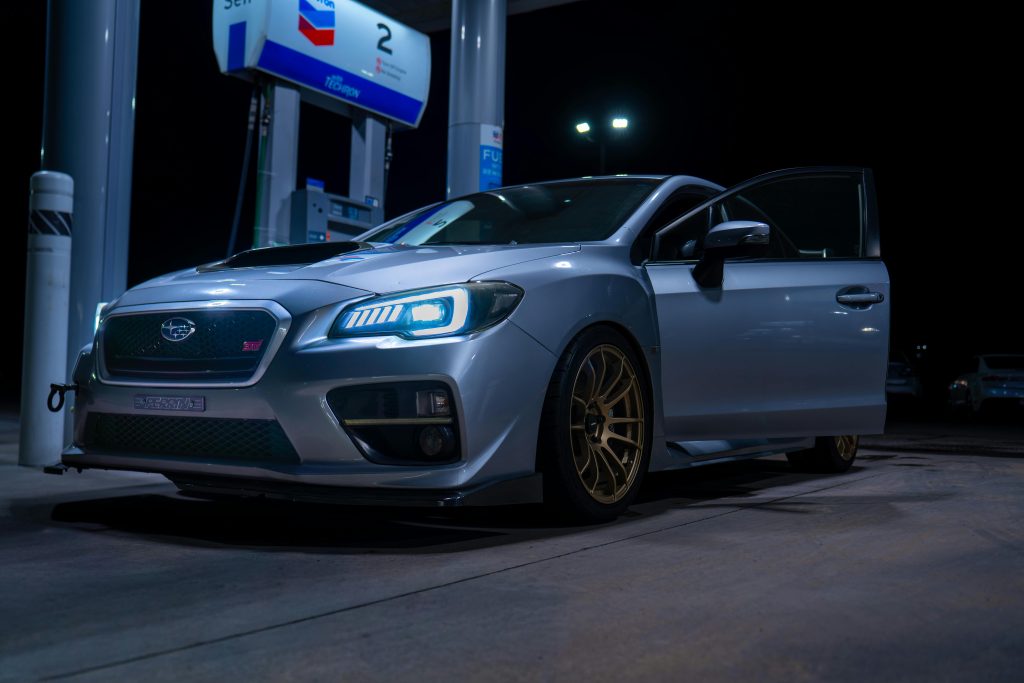
Flat-four rumbles, all-wheel drive, and a rally-inspired chassis to whip around on a budget is nothing to scoff at! The Subaru WRX has been a staple in the North American tuner scene since it arrived in the early-2000’s. Nowadays, the WRX has become one of the go-to cheapest turbocharged sports cars available. A massive aftermarket, active community, and huge potential for modifications makes it a recipe for turbocharged success.
Depending on what generation you purchase, the price will vary. For example, the Bugeye WRX can often be found around $5,000. Comparatively, the 4th generation WRX is now hovering around the $15,000 mark.
If I were in the market, I would aim for the 4th generation as I love the looks, the new engine, and the tech that make it a fun daily driver. For everything you get with the 4th generation WRX, it’s hard to pass it up! If you’re curious how to modify it, visit our 4th gen WRX mod guide for ideas!
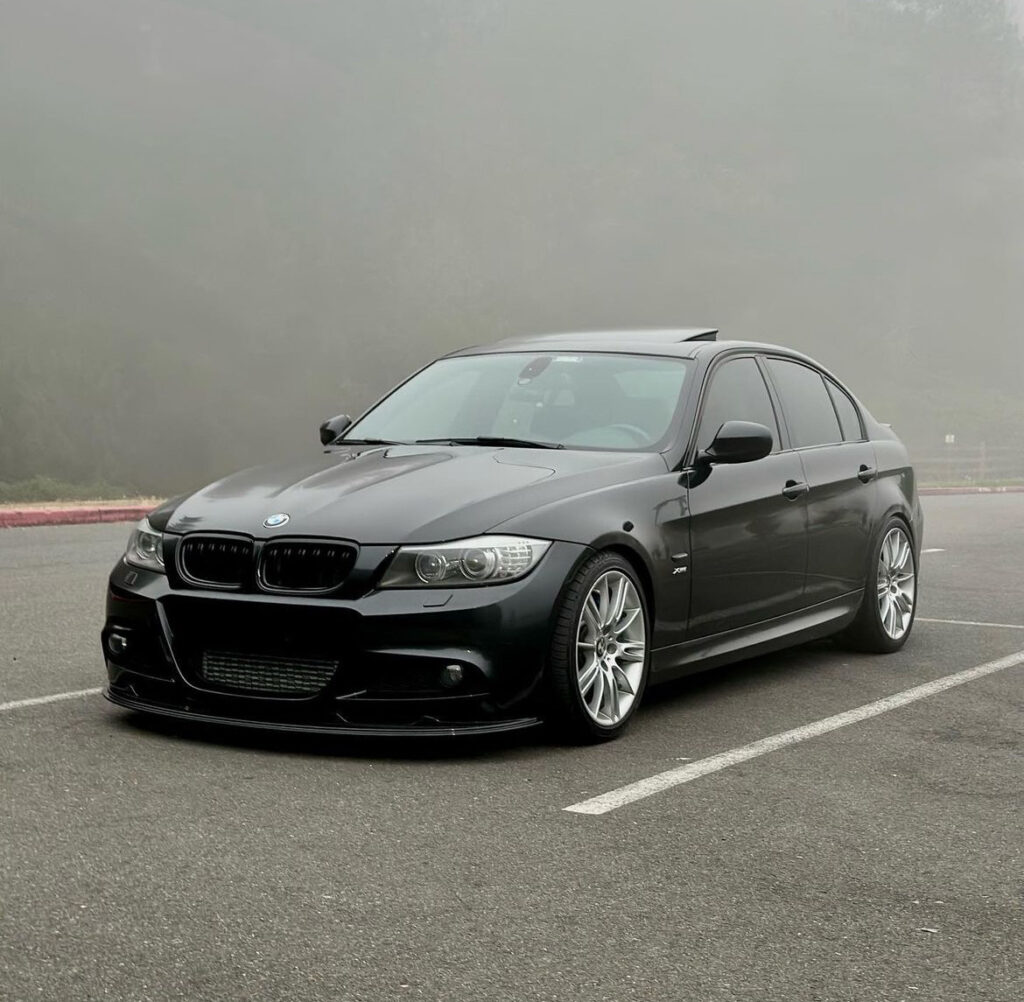
4. BMW 335i
BMW knew exactly what they were doing when they gave us the N54 Twin turbocharged Inline 6. The E9X BMW 3 series is a great all-around platform. It has an awesome blend of luxury, driving dynamics, and power potential. From the factory, the 335i sends you from 0-60 miles per hour in 5.4 seconds. While it has some quirks with the turbos, the aftermarket has plenty of aftermarket options to skyrocket the power and improve the durability of the car. For an average price of $10,000 to $15,000, the E9X 335i is definitely one of the best and cheapest turbocharged sports cars you can buy.
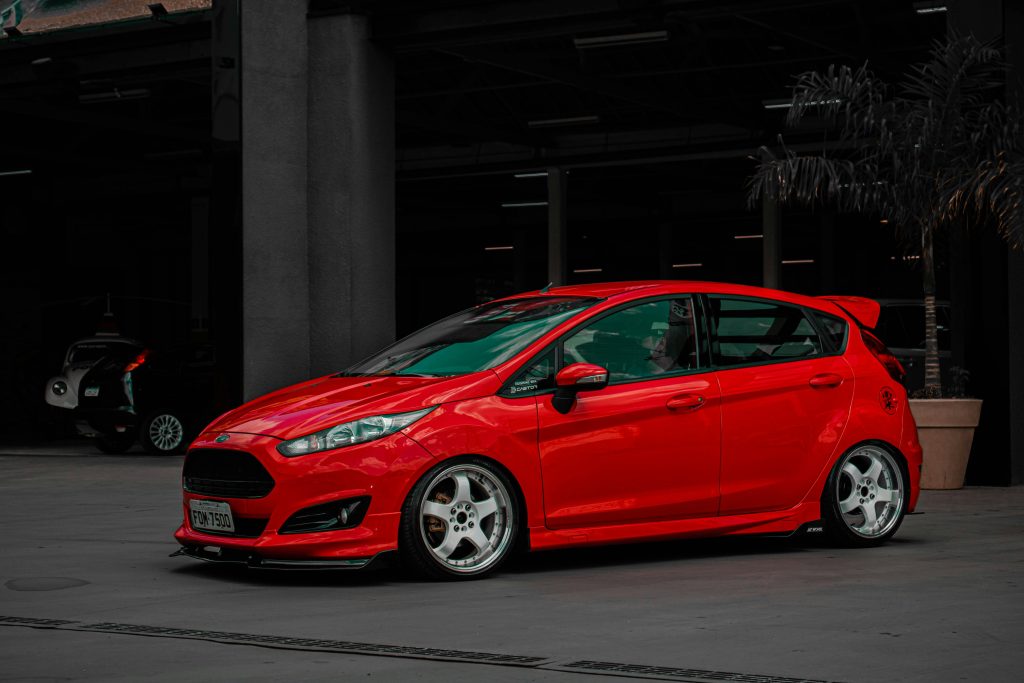
5. Ford Fiesta ST
If you thought the Focus ST was fun as hell, you should get behind the Fiesta ST. Same concept, lighter weight, and stupid cheap. The Fiesta ST weighs around 2700 pounds and is powered by a 197 horsepower turbocharged engine. Automotive journalists and car reviewers everywhere agree the Fiesta ST is one of the funnest and cheapest turbocharged sports cars you can buy.
While I enjoyed having more room in the Focus ST, my brother-in-law’s Fiesta ST was a riot to drive. The car loves to be tossed around a corner and makes you forget it is front-wheel drive. If you want a fun, turbocharged car with a little extra practicality, the Fiesta ST is hard to beat.
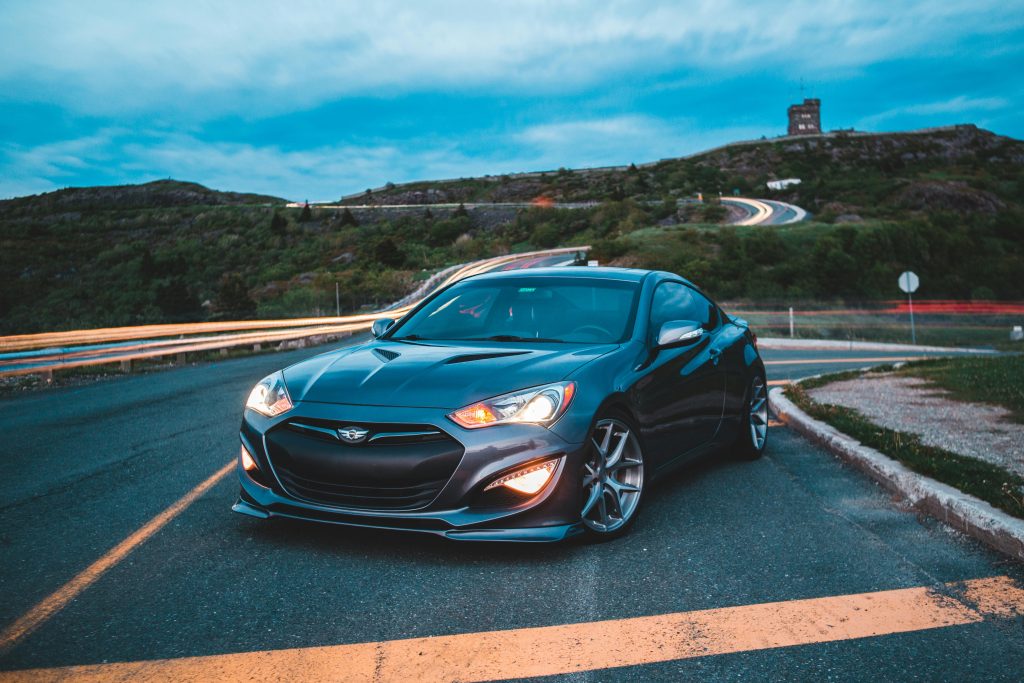
6. Hyundai Genesis Coupe 2.0T
Hyundai’s sport coupe was very short lived for how awesome it was. This car showed Hyundai was down to make fun cars. In my personal opinion, I believe this car ushered in their want for more performance focused vehicles. While this car is no longer in production, it did help bring us the Elantra N and Veloster N.
Fortunately, we have used models that are absolutely DIRT CHEAP for what you are getting. A rear-wheel drive coupe with Turbo 4 power? Sign me up. I’ve looked all over the market and I’m seeing decent running examples in the $5,000s, making it one of the cheapest turbocharged sports cars on this list! The body screams modify and the exhaust sounds pretty solid as well! I wouldn’t be surprised if these start competing with 350Z’s in the budget drift car competition someday.
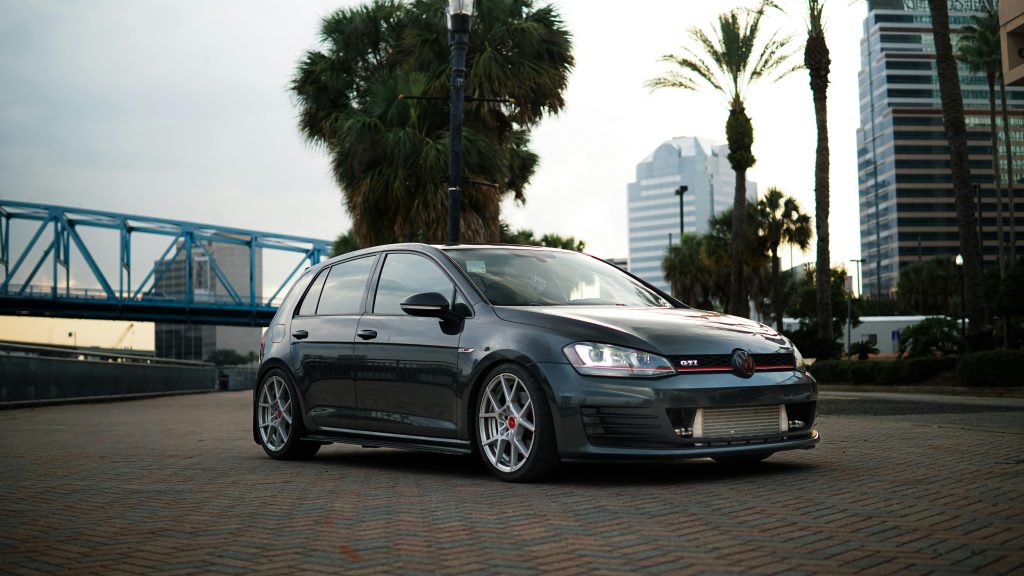
7. Volkswagen GTi
When people think of the cheapest turbocharged sports cars, the Volkswagen GTI is at the top of this list. Ever since the GTI came into existence, this hot hatch has been thrown into motorsports and the tuning scene. With its low weight, great handling, and huge aftermarket, it is an absolute gem to modify.
What makes the GTI a great tuner car is its turbocharged four-cylinder engines. Whether it be a modified MK4 you bought for $3,000 or an MK6 you purchased for $15,000, the GTi offers dynamic handling, easily modified engines, and a massive aftermarket to support it.
Want more european-based sports cars? Read more about our favorite European cars to modify!
Frequently Asked Questions
1. Is maintaining a turbocharged car different than a naturally aspirated car?
Maintaining a turbocharged car is very similar to a naturally aspirated car, with a few caveats. Over the course of owning a turbocharged car, I learned that oil change intervals were more important to adhere to. Even when using synthetic oil, I still changed the oil no later than 5,000 miles. Additionally, making sure your clamps around your intercooler are tight is critical especially since those hoses can come off. Lastly, I highly recommend allowing your car to idle for a few minutes after spirited driving. This allows the turbocharger to cool down while oil is being circulated. If you consistently turn a turbocharged car immediately off after driving it hard, the high residual heat can turn the oil into a sludge.
2. Why a turbocharged car over a supercharged car?
Supercharged cars and turbocharged cars are both forms of forced induction. Supercharged cars are inherently not as efficient due to them being belt driven. Turbochargers are more efficient as they run off of the exhaust gas created by your car, thus no power is lost. A turbocharged car also provides amazing top-end power, keeping you making horsepower throughout the rev range. While turbo lag can be a deterrent, it is not much of an issue in today’s turbocharger technology and tuning.
If you’d like to learn more about forced induction, visit our article where we dive into the fundamentals of power adders!
3. How do you modify A turbocharged car?
Turbocharged cars are fairly straightforward to modify. Installing bolt-on parts such as an air intake, intercooler, cat-back exhaust, and a downpipe allow you to set the turbocharger up for success. Contacting a reputable tuner after installing these parts is critical. While the bolt-on parts may initially make your car run a little better or sound cooler, you are leaving a lot off the table.
One popularized performance modification for turbocharged cars is the use of Ethanol (E85) fuel. E85 fuel has a higher octane rating than widely available gas, giving you tons of power potential! If you would like to learn more about E85 fuel, check out our beginner’s guide here.
A custom tune allows your car to take full advantage of the parts you installed. This is where the big power gains come from! When I installed a custom tune from JST Performance, I was able to boost my Focus ST from its 252 engine horsepower to 265 wheel horsepower!
If you want to learn about how I modified my Focus ST, check out my build sheet here!
Want to have your vehicle featured on our website? Contact us on our website, Pinterest, or Instagram!
Keep up with the latest articles, content, and special offerings by signing up for our email newsletter!